
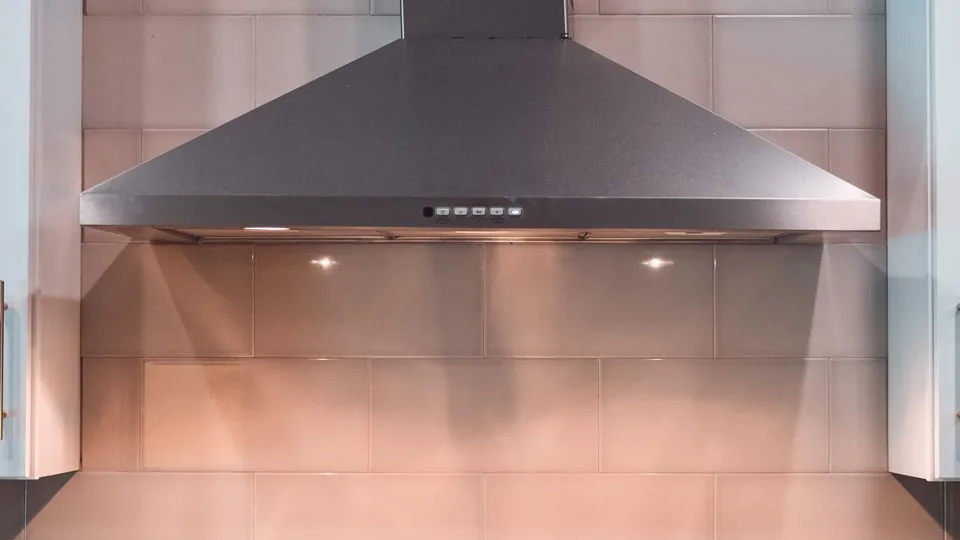
Ducted or recirculating?
Ducted hoods send air outside through a duct and are the more effective type for removing heat, steam, smoke and combustion byproducts. Recirculating (ductless) hoods pull air through a charcoal filter and release it back into the kitchen; they mainly reduce odor and grease. The type decides which fixes help. A blocked exterior damper or crushed duct only matters on a ducted hood, while a spent charcoal filter only matters on a recirculating one.
Weak suction: the usual suspects
- Grease-clogged filters.Metal mesh filters collect grease. Many can be washed in hot, soapy water or the dishwasher — check the manual. Charcoal filters are replaced, not washed.
- A stuck or closed damper.The backdraft damper at the duct outlet can stick shut with grease or debris, or flap loosely outside.
- Duct problems.Long runs, sharp bends, crushed flexible duct, or an undersized duct reduce airflow dramatically. This is an installation matter more than a repair matter.
- The blower itself.A worn or unbalanced blower wheel, failed capacitor or tired motor gives a fan that sounds fine but moves little air.
- Competing airflow.In a tightly sealed home, a strong hood may be starved of replacement air.
Noises and what they suggest
- Rattling or clanking. A loose filter, damper flap or mount.
- Whirring that rises and falls. A damaged or dirty blower wheel.
- Grinding or squealing. Motor bearings are failing.
- Humming but no spin. A failed capacitor or a seized motor.
Lights, switches and controls
A hood light that does not work is frequently just the bulb; check what type the hood takes, because many use specialty LED or halogen bulbs. If new bulbs do not help, the light socket or switch may be faulty. Touch controls that behave erratically often come down to a damaged control board or moisture from steam. When you request service, note which functions work (low speed, high speed, light) and which do not.
Cooking style and make-up air
Gas ranges, frequent searing and high-output cooktops make ventilation matter more. Very powerful hoods can pull air out faster than the house can replace it, which can affect other combustion appliances. Some codes require a make-up air arrangement for high-capacity hoods; that is a conversation for a qualified installer and local building rules rather than a repair job.
Turn the hood on before you start cooking and leave it running a few minutes afterward. It captures far more steam and grease that way, and your cabinets stay cleaner.
When replacement is the better idea
If the hood is undersized for your range, vents poorly because of a bad duct run, or has a cracked housing, a new hood or a duct fix may be the only meaningful improvement. Repairs are best for failed motors, switches, lights and boards on hoods that otherwise suit the kitchen. See the repair-or-replace guide for how to weigh the cost.
For help with a particular hood, send a request. Everything we handle, from cooktops to ovens, is summarized on our home page for appliance repair in Austin, TX. You can also go back to microwave repair if your hood is a microwave combination unit.
Not sure the hood is the culprit? See all kitchen services we refer.
Questions people ask
How often should I clean range hood filters?
For regular cooking, about once a month is a common recommendation; heavy frying may call for more often. Washable filters can go in hot soapy water, depending on the manual.
Why is my range hood loud?
Loose filters, a worn blower wheel or a damper that is vibrating are common reasons. Fan speed and duct design also affect noise.
Does a recirculating hood remove steam and smoke?
Only partly. Recirculating hoods filter some grease and odor but release the air back into the room. A ducted hood removes more.
Can you add a duct to a ductless hood?
That is an installation project and depends on the layout of your home. A qualified installer or contractor should evaluate it.
Last updated October 13, 2026. This page offers general information to help you describe and understand a problem; it is not a diagnosis. Always follow your appliance manual and local safety rules.