
Electric and gas ovens fail differently
Electric ovens
- Bake and broil elements burn out, blister or lose connections.
- A temperature sensor can drift, so the oven reaches the wrong temperature.
- A tripped or failing breaker, or a fault on one leg of the 240-volt supply, can give weak heat or none at all.
Gas ovens
- The igniter often weakens with age: it glows but does not draw enough current to open the gas valve.
- Safety valves and sensors are involved in lighting.
- Any suspected gas problem is a job for a qualified professional, not a DIY fix.
Do not touch switches or light anything. Leave the home, then call 911 and your gas utility from outside.
Symptoms and what they usually mean
| What you notice | Often points to |
|---|---|
| No heat at all, display works | Bake element, igniter (gas), thermal fuse, control or relay |
| Broil works, bake does not | Bake element, its wiring, or the control relay |
| Heats, but runs well under temperature | Temperature sensor, weak igniter, element nearing end of life |
| Burns on one side or bottom | Rack position, convection fan, sensor calibration, door gasket |
| Dead after a self-clean | Thermal fuse, door lock motor or control board stressed by high heat |
| Door will not unlock or latch | Latch motor or switch, or a control still in a lock cycle |
A simple accuracy check
Most ovens are allowed some variation, but a large gap shows up in the results. To check, place an inexpensive oven thermometer on the middle rack, preheat to 350°F, wait a full 20 minutes after the preheat signal, then read it. Repeat once more. A small difference is common; a gap of 25°F or more, or a thermometer that never reaches the target, is worth a visit. Many ovens allow the owner to adjust temperature offsets; the manual explains the steps.
What not to do
- Do not run the self-clean cycle on an oven that is already behaving oddly; the high heat can finish off a weak part.
- Do not use foil to cover the oven floor or line the bottom — it can trap heat and damage the finish and the element.
- Do not keep using an oven with a cracked inside glass, visible damaged elements or exposed wiring.
- Do not try to repair a gas component yourself.
Wall ovens and double ovens
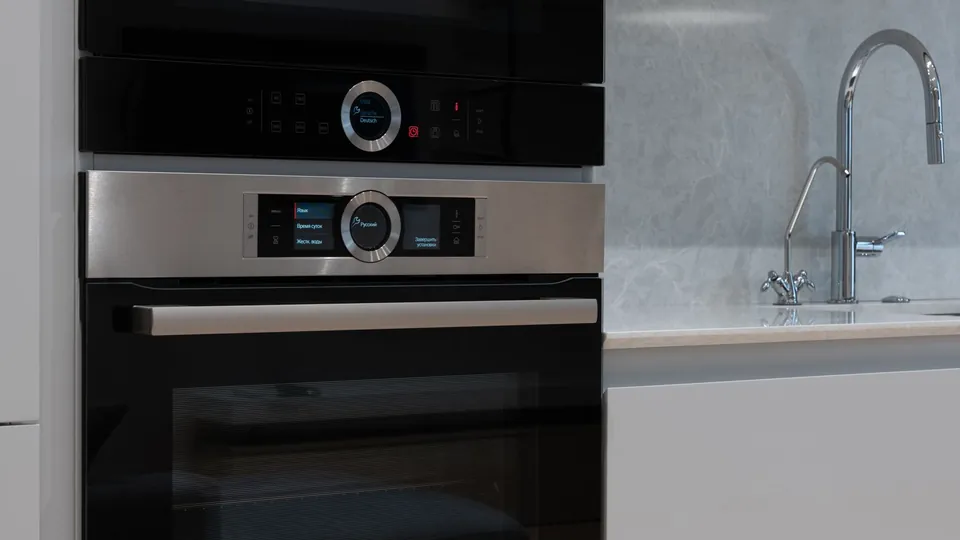
Built-in wall ovens bring their own considerations: a cabinet cutout that limits access, a hardwired supply, and sometimes a control board mounted behind the unit. Two cavities can share parts, so a failure in one may not affect the other. Mention if you have a double oven and which cavity is affected.
Repair or replace
For an oven in good shape, an element, igniter or sensor repair is usually inexpensive compared with the cost of a replacement. A control-board failure on an older range is where people most often decide to replace. Our repair-or-replace guide explains a practical way to compare.
Ready for a visit? Request a technician in Austin through the home page, or use the form below. If your oven is part of a freestanding range with burners, take a look at our range and stove repair page too. Everything we cover is also summarized in this overview of how we work.
Questions people ask
Why will my oven not reach the temperature I set?
A worn bake element, a drifting temperature sensor or a weak gas igniter are common reasons. An oven thermometer helps confirm whether it is truly low.
Is it normal for the oven to smell the first few times it is used?
A new oven can give off a light odor while manufacturing residue burns off. A persistent burning or gas smell is not normal and should be addressed right away.
My oven stopped working right after a self-clean. Did I break it?
Self-clean cycles run at very high temperatures and can expose a weak thermal fuse, door lock motor or control board. It is not unusual for an existing weakness to fail during a cycle.
Can a technician calibrate my oven?
Often yes, or they can show you how to apply a temperature offset in the controls. If the sensor itself is failing, replacing it is the lasting fix.
Last updated October 13, 2026. This page offers general information to help you describe and understand a problem; it is not a diagnosis. Always follow your appliance manual and local safety rules.